The 12 Best Vegetables for Containers (With Pot Sizes That Work)
No yard is not a verdict. A sunny balcony, a strip of driveway, three concrete steps with southern exposure — any of them can produce meaningful food: pounds of tomatoes, a summer of salads, more cucumbers than the household strictly requested. Container vegetables aren’t a consolation prize for the landless, either; even gardeners with big beds keep pots by the kitchen door, because nothing beats the commute.
But container success is decided before planting, by a single unglamorous factor beginners consistently get wrong: pot size. Nearly every sad balcony tomato — wilting daily, cracking fruit, quitting in August — is a five-gallon plant in a two-gallon home. So this guide is organized around the number that matters, crop by crop: the honest minimum container for each of the twelve vegetables that repay pot culture best, plus the variety names bred for small spaces. (For the container fundamentals — drainage, potting mix, the daily rhythm — start with our container gardening guide; this article stands on its shoulders.)
The three rules that govern every pot
- Volume is the water tank. A pot’s soil is the plant’s entire reserve — no deep earth to draw on. Small pots in July sun can cycle from soaked to bone-dry between breakfast and dinner. Every upsize you give a plant is hours of drought insurance and a bigger root system; when torn between two sizes, take the bigger, always.
- Potting mix, not garden soil. Bagged mix holds air and drains in a container; garden soil in a pot compacts into a brick. This is the one purchase that can’t be substituted.
- Feeding is on you. Constant watering rinses nutrients out the drainage holes, so container crops eat from your hand: half-strength liquid fertilizer every week or two once plants are established, or a slow-release granular mixed in at planting and topped up mid-season.
With those set, here’s the roster — sized, sorted, and named.
The leafy sprinters (smallest pots, fastest wins)
1. Loose-leaf lettuce & salad greens — 6–8“ deep, any width
The best container crop, period. Shallow roots, four weeks to harvest, happy with just 3–4 hours of sun (a boon for east-facing balconies), and cut-and-come-again: shear the outer leaves an inch above the crown and the box refills weekly for a month or more. Sow a pinch of seed every two weeks in a window box and salad season never ends — shift the box to afternoon shade when summer heat pushes it toward bolting.
2. Spinach & Asian greens — 6–8“ deep
Same program as lettuce, same modest pot, faster in cool weather. Bok choy and tatsoi go seed-to-stir-fry in about a month; spinach prefers the cool ends of the season and rewards a spring box and a fall box.
3. Radishes — 6“ deep
The instant gratification crop: 25–30 days, seed to table, in any pot deeper than a cereal bowl. Perfect for children, gaps between slower crops, and the impatient. Sow thinly, thin ruthlessly (crowded radishes make leaves, not globes), keep evenly moist.
The bush producers (mid-size pots, real harvests)
4. Bush beans — 2–3 gallons
A pot of bush beans is quiet, pretty, and startlingly productive: sow six seeds around a 12-inch pot after frost, pick a bowl every few days for three weeks. Succession-sow a second pot three weeks after the first. No trellis, no fuss — beans even bring their own nitrogen arrangements.
5. Peppers — 3–5 gallons each
Peppers may honestly prefer pots: the confined root run and extra soil warmth suit their tropical temperament, and a glazed pot on hot pavement is a microclimate they read as home. One plant per 3-gallon minimum (5 is better for bells), full sun, steady water, and a short stake for fruit-heavy branches. Compact varieties abound — and hot peppers, nearly all naturally compact, are arguably the most ornamental edible you can grow by a door.
6. Eggplant — 5 gallons
Same heat-loving logic as peppers, one size up. Compact varieties (‘Patio Baby’, ‘Fairy Tale’, ‘Hansel’) were bred exactly for this job and fruit heavily at two feet tall. Dark pots help in cool climates — eggplant sulks below 60°F and pots warm faster than ground.
7. Cherry tomatoes — 5 gallons minimum, 10 preferred
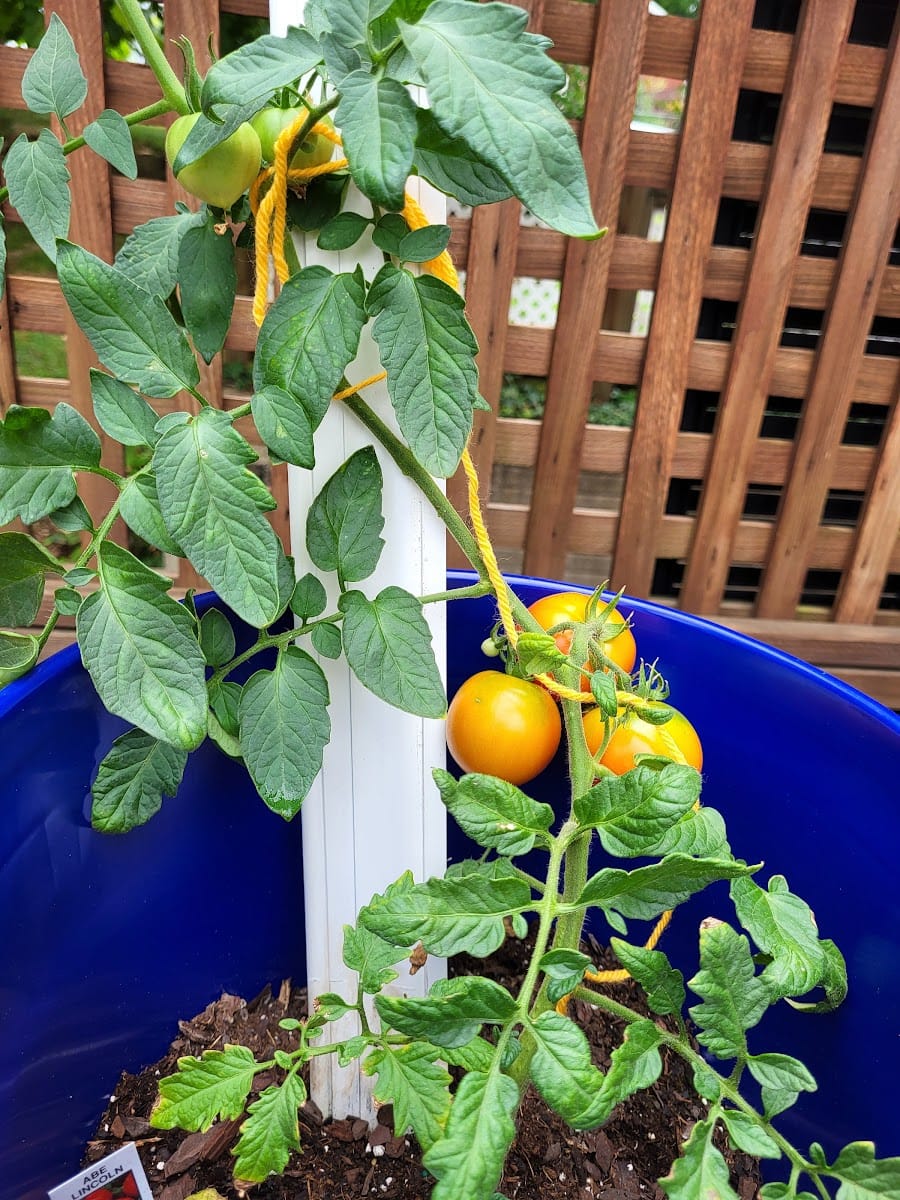
The balcony headliner, with the balcony caveat: choose container breeding. Dwarf and patio types — ‘Tumbling Tom’ (hanging baskets), ‘Tiny Tim’, ‘Patio Choice’ — thrive in 5 gallons; determinate bush types (‘Bush Early Girl’, ‘Celebrity’) want 10; and full-size indeterminates are eight-foot projects that need 10–15 gallons, a serious cage, and a gardener home every single day at watering time. A fabric grow bag is the cheap, excellent pot here. Cage at planting, water with religious consistency (cracked fruit and blossom-end rot are both watering-swing injuries — the tomato guide covers the full clinic), and feed every week once fruiting.
Alt: Comparison of a thriving tomato in a large grow bag and a struggling tomato in an undersized pot
Caption: Same variety, same sun, five gallons of difference.
The climbers and divers (big pots, vertical thinking)
8. Cucumbers — 5 gallons + a trellis
Give a cucumber a 5-gallon pot and something to climb — railing, netting, a $10 wire tower — and it becomes a productive green wall. Climbing keeps fruit straight, clean, and visible (the zucchini-sized surprise problem afflicts cucumbers too). Bush varieties (‘Spacemaster’, ‘Bush Champion’) skip the trellis in exchange for a bit less yield. Thirstiest crop on this list; a water-stressed cucumber turns bitter, literally.
9. Zucchini & summer squash — 7–10 gallons
Yes, really — one plant in a half-barrel or 10-gallon grow bag produces the same comic surplus as its garden cousins. Choose compact varieties (‘Patio Star’, ‘Astia’), give it your sunniest large spot, water daily in heat, and check under the leaves every single day, because container zucchini hide baseball bats exactly like bed zucchini do.
10. Peas — 3 gallons + netting, spring and fall
Snap peas in a pot flanking a trellised railing are a cool-season pleasure: sow direct as early as you can work the mix, pick pods within two months, pull and replace with beans when heat arrives. The container advantage is timing — pots thaw and warm weeks before garden beds, so pot peas start earliest on the block.
The root cellar (depth over width)
11. Carrots — 12“+ deep, loose mix
Carrots in containers can outperform garden carrots — no rocks, no clay, no wireworms — if the pot is honestly deep and the variety honestly matched: ‘Paris Market’ rounds and Chantenay types in 12 inches; long imperator types only in true deep planters. Sow thinly, thin to an inch apart (the hard part, emotionally), keep moist through the long germination.
12. Potatoes — 10–15 gallon grow bag
The novelty act that earns its spot: seed potatoes in six inches of mix, add more mix as shoots rise (“hilling” by topping up), then at season’s end tip the whole bag over and treasure-hunt with your hands. Kids remember it for years. Yields are modest per bag but the fun-per-gallon is unmatched, and homegrown new potatoes are a different vegetable from stored store ones.
Composing the balcony (a sample season)
A 10-foot sunny balcony, translated: one 10-gallon bag with a dwarf cherry tomato (caged), two 5-gallon pots — one cucumber on railing netting, one pepper — a 3-gallon of bush beans resown monthly, two window boxes cycling lettuce and greens spring/fall, a radish pot for morale, and the herb pots by the door because cooking is why we’re here. That’s a real market stall’s worth of categories in forty square feet — plus the container gardener’s secret weapon, mobility: pots migrate toward sun in May and away from it in a heat wave, which no bed can do.
The honest closing note: container vegetables trade land for attention. The daily water check (twice daily in high summer — the summer survival rules apply double in pots) is non-negotiable, and vacation requires a plan or a neighbor. But the attention pays interest — problems get spotted at arm’s length, harvests happen in slippers, and nothing in gardening beats eating a warm cherry tomato eight feet from your own kitchen while the neighbors wonder how the balcony smells like basil.
Frequently asked questions
What size pot do I need to grow vegetables?
Bigger than the garden center implies. Rough minimums: 5 gallons for a tomato or squash (bigger is better), 3 gallons for a pepper or eggplant, 1–2 gallons for herbs and greens, and 12 inches of depth for carrots. Undersized pots are the top cause of container failure — they dry hourly, starve roots, and cap the harvest.
Which vegetable is easiest to grow in a container?
Loose-leaf lettuce and other salad greens. They're shallow-rooted (happy in 6–8 inches of soil), fast (harvestable in a month), tolerant of partial sun, and cut-and-come-again — one window box can produce salads for weeks. Radishes and bush beans tie for second.
Can I use garden soil in containers?
No — it compacts into an airless brick in a pot, drains badly, and imports weed seeds and disease. Use bagged potting mix, which is engineered for container drainage and aeration. It's the one non-negotiable purchase in container growing; cheap out on the pot, never on the mix.
How often do container vegetables need water and fertilizer?
Far more than beds — this is the honest cost of pot growing. In summer, check daily and expect to water most days (small pots sometimes twice); a pot's soil volume is its entire water reserve. Feed with half-strength liquid fertilizer every 1–2 weeks from a month after planting, since frequent watering flushes nutrients out the drainage holes.
Do container tomatoes need different varieties?
Strongly preferred, yes. Look for determinate (bush) or dwarf types bred for pots — names like 'Patio', 'Bush Early Girl', 'Tumbling Tom', 'Tiny Tim' — which stay compact and set fruit in a concentrated window. A full-size indeterminate tomato can live in a 10+ gallon pot but becomes an eight-foot staking project with a drinking problem.
How much sun does a container vegetable garden need?
Same as any vegetable garden: 6–8 hours of direct sun for fruiting crops (tomatoes, peppers, cucumbers, squash), while leafy greens and many herbs accept 3–4. The container advantage is mobility — pots can chase the sun across a balcony through the season, which no garden bed can do.
Why did my container carrots come out short and twisted?
They hit the bottom or ran into compacted mix. Carrots need genuinely deep, loose, rock-free soil — a pot at least 12 inches deep filled with fluffy mix, and a shorter variety ('Paris Market' rounds, 'Short 'n Sweet', Chantenay types) chosen to match the container. Full-length imperator carrots need more depth than most pots offer.