How to Grow Tomatoes: From Planting to Harvest
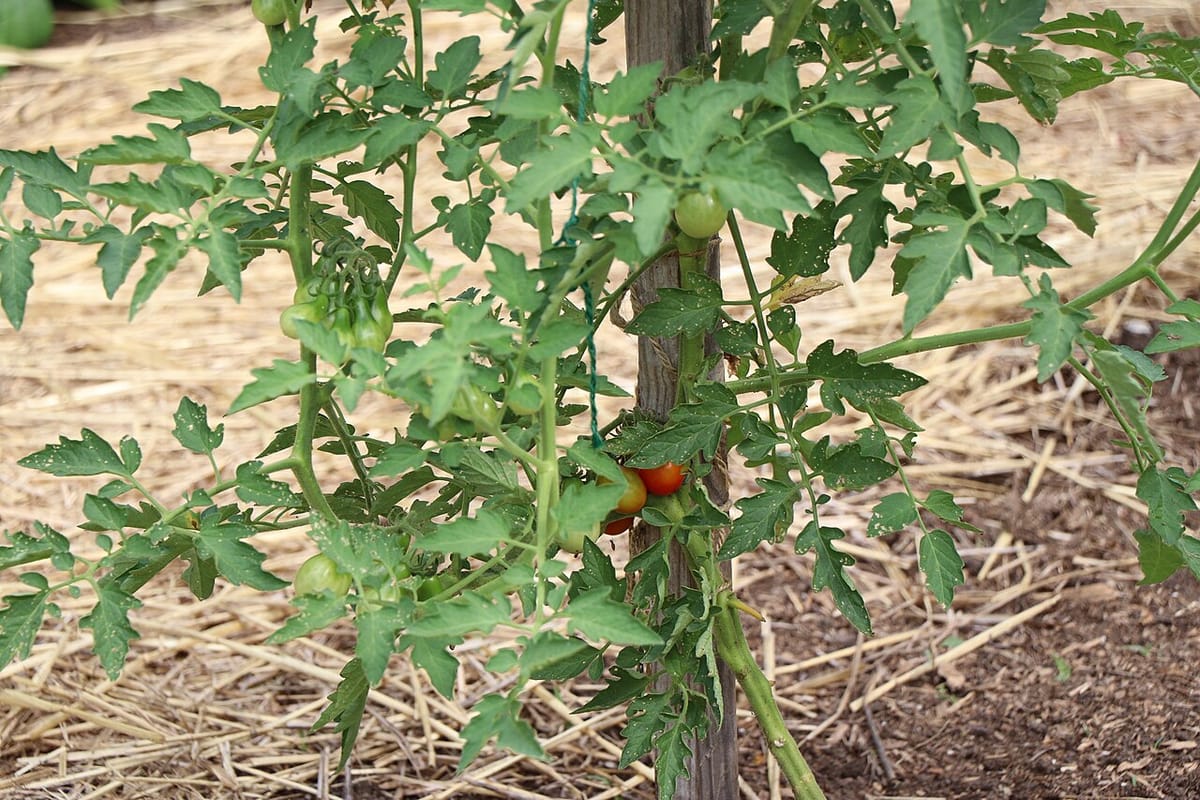
Ask ten gardeners why they started and at least half will say tomatoes. Nothing in the supermarket compares to a sun-warmed tomato picked at full ripeness, and no other crop rewards a little skill so generously — one well-grown plant can produce ten to twenty pounds of fruit.
Tomatoes are also where beginners meet their first real gardening puzzles: mysterious black-bottomed fruit, jungle-thick plants with no flowers, leaves with target-shaped spots. Every one of those has a knowable cause and a fix. This guide covers the full arc — choosing varieties, planting the counterintuitive tomato way, supporting, watering, feeding, pruning, and troubleshooting — so your first serious tomato year goes right.
Choose the right variety (this decides half your season)
Before flavor, before color, one distinction matters most:
Determinate (“bush”) varieties grow to a predetermined size — usually three to four feet — set most of their fruit at once, ripen it over a few weeks, and wind down. They suit containers, small spaces, short seasons, and anyone who wants a big batch at once for sauce or canning. Common examples: Roma, Celebrity, Bush Early Girl.
Indeterminate (“vining”) varieties are the ones that eat garden fences: they grow, flower, and fruit continuously until frost kills them, easily reaching six feet or more. They need serious support but reward you with a steady stream of fruit for months. Most cherry tomatoes and nearly all heirlooms — Brandywine, Cherokee Purple, Sungold — are indeterminate.
Beyond that, three quick filters:
- Days to maturity (on every label) counts from transplanting, not sowing. Short growing season? Stay under 75 days.
- Disease resistance codes — letters like V, F, N, T after a variety name indicate bred-in resistance to common wilts and viruses. For a first garden, resistant hybrids are cheap insurance; you can romance heirlooms in year two.
- Size class: cherry types are markedly more forgiving than beefsteaks — they set fruit in imperfect weather and resist cracking. If you grow just two plants, make one a cherry.
Start from transplants (and what to look for)
Tomatoes need six to eight weeks of indoor coddling before they’re garden-ready, which is why nearly all first-year growers should buy transplants rather than starting seed. When you’re choosing at the nursery, pick plants that are:
- Stocky, not tall — a short plant with a thick stem beats a leggy one with flowers already on it. Early flowers on a pot-bound seedling are a stress signal, not a bonus.
- Deep green, with no yellowing, purple-tinged, or spotted leaves.
- Unblemished at the stem base — dark lesions there are trouble you’d be paying to adopt.
Six to eight plants feed a family with surplus. Two or three feed a couple. Resist the flat of twelve; nobody’s marriage has survived twelve indeterminate tomato plants.
Plant deep — the one weird trick that’s real
Tomatoes have an unusual ability: they grow roots from any part of the stem that touches soil. Experienced growers exploit this ruthlessly.
Wait until one to two weeks after your last frost date, when nights reliably stay above 50°F (10°C) and soil feels warm. Then:
- Choose full sun — eight hours minimum. There is no shade-tolerant tomato.
- Strip the lower leaves, leaving only the top cluster or two.
- Bury two-thirds of the plant. Dig deep, or dig a shallow trench and lay the plant sideways with the tip bent gently upward (roots don’t care; the tip straightens in days). The buried stem becomes root.
- Space generously: 24 inches between determinates, 30–36 between indeterminates. Crowded tomatoes trade fruit for disease.
- Water in deeply and, if cutworms are known in your area, collar the stem with a ring of cardboard.
That buried stem builds a root system that will carry the plant through August heat waves other tomatoes wilt under.
Alt: Diagram comparing shallow tomato planting to deep planting with roots along the buried stem
Caption: Buried stem becomes root: the deep-planted tomato on the right develops several times the root mass.
Support the plant before it needs it
Install support at planting time — wrestling a five-foot plant into a cage in July damages roots and breaks branches.
- Stakes (6–8 feet, driven a foot deep) suit indeterminates trained to one or two stems, tied loosely every 8–12 inches with soft ties.
- Cages suit determinates and cherry types. Know that the flimsy cone-shaped cages sold everywhere are adequate only for compact determinates; indeterminates flatten them by August. Concrete-reinforcing wire bent into a cylinder makes a cage that outlives the gardener.
- A trellis or panel (cattle panel arched between beds is a favorite) handles multiple vines and doubles for cucumbers — a space-saver we cover more in container and small-space growing.
Whatever you choose, the goal is identical: keep fruit and foliage off the ground, where soil-borne disease and slugs wait.
Water deeply, mulch always
More tomato problems trace to watering habits than to any pest. The rules are few:
- Deep and infrequent beats shallow and daily. One to two inches per week, rain included, delivered in one or two soakings. Established, deep-planted tomatoes have roots a foot or more down; water for those roots.
- Consistency matters as much as quantity. Alternating drought and flood is the direct cause of split fruit and a major contributor to blossom end rot (more below).
- Water the soil, never the foliage. Wet leaves overnight are how early blight RSVPs. Drip lines or a watering wand at the base, ideally in the morning.
- Mulch 2–3 inches — straw, shredded leaves, or grass clippings — once soil has warmed. Mulch evens out soil moisture, blocks weeds, and stops rain from splashing disease spores from soil onto lower leaves. It is the least optional “optional” step in tomato growing.
Feed for fruit, not foliage
Tomatoes are hungry, but in a specific way. Nitrogen builds leaves; phosphorus and potassium build flowers and fruit. Overdo nitrogen and you get a gorgeous, barren shrub.
A simple regimen: work compost into the bed before planting, add a balanced or slightly low-nitrogen organic fertilizer (something like 3-4-6) at planting, then side-dress lightly when the first fruit set and again a month later. If leaves are deep green, huge, and flowers are scarce, stop feeding — the plant is telling you it’s over-nitrogened.
Pruning: what suckers are and what to do
In every leaf axil — the 45° joint between the main stem and a branch — a tomato will sprout a sucker: a whole new stem that will make its own leaves, flowers, and suckers. Left alone, an indeterminate becomes a thicket.
Whether to prune depends on type:
- Determinate: don’t. Every sucker carries part of the fixed crop. Pruning determinates just deletes fruit.
- Indeterminate: prune moderately. Training to two or three stems (remove other suckers when finger-sized, snapped off by hand) improves airflow, speeds ripening, and enlarges fruit at some cost in total count. In humid climates the airflow alone justifies it.
- Everyone: strip leaves that touch the ground, and once the plant is fruiting heavily, remove yellowed lower foliage. About a month before your first fall frost, “top” indeterminates — cut the growing tips — so the plant puts its last energy into ripening what it has.
Prune on dry mornings; wounds close faster and disease spreads less.
The classic tomato problems (and honest fixes)
Blossom end rot — leathery black-brown sunken patch on the fruit’s bottom. Not a disease: a calcium delivery failure caused overwhelmingly by uneven soil moisture (and sometimes by over-fertilizing young plants). Fix watering consistency and mulch; later fruit usually comes clean. The eggshells-in-the-hole ritual is harmless folklore — most soils have plenty of calcium; the plant just needs steady water to move it.
Blossom drop — flowers form, then fall without fruiting. Temperature, almost always: pollen fails below ~55°F nights or above ~90°F days. Nothing to spray; conditions moderate and fruit set resumes.
Cracked fruit — concentric or radial splits, typically after heavy rain following drought. The flesh grows faster than the skin. Mulch, even watering, and harvesting just-ripe fruit before storms limit it. Cherry varieties resist cracking best.
Early blight — dark leaf spots with target-like concentric rings, starting on lowest leaves and climbing. Remove affected leaves promptly (into the trash, not compost), keep foliage dry, mulch, and rotate where tomatoes grow year to year.
Hornworms — leaves vanishing branch by branch means a green caterpillar the size of your finger is nearby, camouflaged brilliantly. Hand-pick at dusk. If one carries what look like white rice grains, leave it: those are parasitic wasp cocoons, and that hornworm is already finished while its passengers go on to protect your garden.
Aphids on new growth — clusters of soft green or black insects on tender tips. A hard blast of water solves most infestations; our natural aphid control guide covers the escalation path.
Alt: Collage of four common tomato problems: blossom end rot, early blight, fruit cracking, and a hornworm
Caption: The big four, at a glance. All are manageable; none means the season is lost.
Harvest at the right moment
A tomato is ready when its color is full and even for the variety and the fruit yields slightly to a gentle squeeze. Ripe fruit twists off easily; if you’re tugging, it isn’t ready. In brutal summer heat, it’s fine to pick at the first full blush and let fruit finish on the counter — flavor develops nearly identically, and you beat the birds and cracking.
Keep picked tomatoes at room temperature, stem side down, out of sun. Refrigeration below about 55°F dulls flavor and makes texture mealy; it’s a last resort for fully ripe surplus.
Before the first fall frost, strip every mature green fruit and ripen indoors in a single layer. Green tomatoes with any gloss to their skin will get there; a nearby ripe banana (ethylene) hurries them along.
The year-two habit that changes everything
When the season ends, note three things: which varieties earned their space, which problems showed up, and where the tomatoes grew — because next year they should grow somewhere else. Rotating tomatoes (and their relatives: peppers, eggplant, potatoes) to a new bed on a three-year cycle starves the soil-borne diseases that otherwise accumulate. Pair rotation with a fall layer of compost — our composting guide will keep you supplied — and your tomato beds get stronger every season, right as your skills do.
Grow a cherry and a slicer, plant them deep, mulch them well, water them like you mean it — and somewhere around mid-July you’ll eat a tomato that explains, in one bite, why people write this much about them.
Frequently asked questions
What's the difference between determinate and indeterminate tomatoes?
Determinate (bush) varieties grow to a fixed size, ripen most of their crop in a few weeks, and suit containers and sauce-making. Indeterminate (vining) varieties keep growing and fruiting until frost, need tall support, and give a steady supply for fresh eating. Check the label or seed packet — it's always listed.
Why should tomatoes be planted deep?
Tomato stems grow roots from any buried portion. Planting a transplant with two-thirds of its stem underground (leaves stripped from the buried part) creates a massive root system that makes the plant more drought-tolerant and faster to establish. Very few other vegetables tolerate this — don't try it with peppers.
What causes blossom end rot and how do I fix it?
The sunken black patch on the fruit's bottom is a calcium delivery problem, almost always caused by uneven watering rather than a lack of calcium in the soil. Mulch, water deeply and consistently, and the problem usually resolves on later fruit. Eggshells and antacid tablets in the planting hole are folklore — consistency of moisture is the fix.
Should I prune tomato suckers?
On indeterminate varieties, removing some suckers (the shoots that emerge at 45° between stem and branch) improves airflow and fruit size at the cost of total yield — reasonable to prune to 2–3 main stems in humid climates. On determinate varieties, don't prune suckers at all; every one you remove deletes a fruit cluster.
Why are there flowers but no fruit?
Usually temperature: tomato pollen fails when nights stay below about 55°F (13°C) or days run above about 90°F (32°C), so blossoms drop unfertilized. Excess nitrogen (lush leaves, few flowers) is the other classic cause. Both fix themselves when conditions moderate.
Can I ripen green tomatoes off the vine?
Yes — any tomato showing the faintest blush will ripen indoors at room temperature, and fully green mature fruit often will too. Before your first fall frost, pick everything of decent size and ripen it in a single layer out of direct sun. A ripe banana nearby speeds things up via ethylene.
Should tomatoes be refrigerated?
Not if you can help it. Temperatures below about 55°F (13°C) dull flavor and turn the texture mealy. Store ripe tomatoes on the counter, stem side down, and eat within a few days.