Lawn Care for Beginners: The Five Habits That Fix Most Lawns
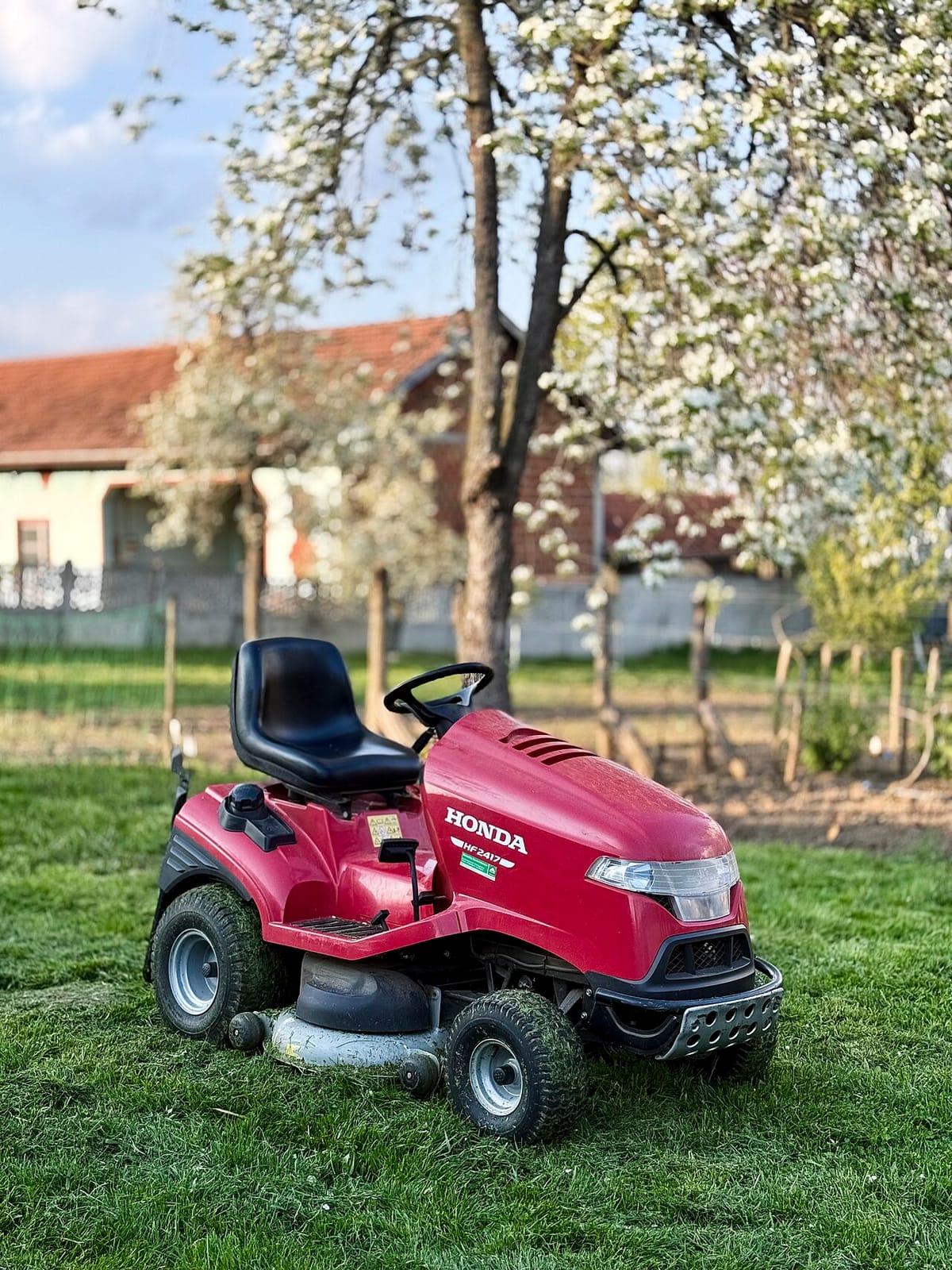
The lawn-care aisle would like you to believe that a decent lawn requires a four-stage annual program, a spreader, a calendar of applications, and a modest chemistry background. Meanwhile, turf scientists at university extensions keep publishing the same quiet counterpoint: the majority of home lawn problems — thinness, weeds, brown patches, drought collapse — trace to two errors that cost nothing to fix. People mow too short, and they water too often.
This guide is lawn care with the marketing removed: five habits, ranked by impact, that transform most lawns in one growing season. No product does more than habit one, and habit one is a lever on your mower.
First, know which grass you own
One fact changes every date in lawn care. Lawns come in two families:
- Cool-season grasses — Kentucky bluegrass, fescues, perennial ryegrass — dominate the northern two-thirds of the U.S. They surge in spring and fall, sulk or go dormant in high summer, and their big care moments are September, not May.
- Warm-season grasses — bermuda, zoysia, St. Augustine, centipede — rule the South. They wake late, thrive in heat, brown out after frost, and want their feeding and seeding in late spring and summer.
Not sure which you have? Cool-season lawns green up early in spring and struggle in August; warm-season lawns do the reverse (and often go uniformly tan all winter). Your county extension can confirm from a photo. Everything below covers both, with cool-season timing first since it fits most readers — but this one identification is why your neighbor’s schedule might be exactly wrong for you.
Habit 1: Mow high (the whole game, mostly)
Set the mower to 3–4 inches for cool-season grass — usually the highest notch — and leave it there (warm-season types run shorter: bermuda 1–2 inches, zoysia around 2, St. Augustine 2.5–4). What that buys, mechanically:
- Deeper roots. Root depth mirrors top growth; tall grass builds the roots that find water in July.
- Free weed control. Weed seeds — crabgrass above all — need light at soil level to germinate. A tall canopy is permanent shade at exactly that height. Turf trials repeatedly show mowing height alone shifting weed counts more than herbicide programs.
- Drought endurance and cooler crowns. A scalped lawn browns first, every time.
Two co-rules complete the habit. The one-third rule: never remove more than a third of the blade at once — cutting 6-inch grass to 3 taxes the plant and dumps clumps; if it got away, take it down in two mowings a few days apart. And mulch, don’t bag: clippings are recycled fertilizer (about a quarter of the lawn’s annual nitrogen), they don’t cause thatch, and hauling them to the curb is disposing of something you’d otherwise buy in a bag with a spreader.
Habit 2: Sharpen the blade (the ten-dollar transformation)
A dull mower blade doesn’t cut grass — it tears it, leaving every blade tip shredded and whitish. Multiply by a million tips and the whole lawn takes on a gray-brown haze days after mowing, plus a thousand ragged wounds that lose water and admit disease. If your lawn looks tired within three days of a mow, this is usually why.
Sharpen (or replace) the blade once or twice a season — any hardware store or small-engine shop does it cheaply, or a file and ten minutes does it at home. The before/after on a torn-up lawn is startling, and no product on the shelf replicates it. While you’re at it: mow when the grass is dry, and vary your mowing pattern so you’re not laying ruts.
Habit 3: Water deeply or barely at all
The lawn version of a rule this site applies everywhere in the garden: deep and infrequent beats shallow and daily. The daily-sprinkle lawn keeps its roots in the top two inches — then collapses in the first real heat. The deeply watered lawn drinks an inch a week (rain included) in one or two sessions and roots down past the drought layer.
The calibration is pleasingly low-tech: set a tuna can (or several) on the lawn, run the sprinkler, and time how long an inch takes — that’s your session length forever. Water in early morning; evening watering leaves grass wet overnight, which is how fungal patches start. If footprints stay flat in the grass instead of springing back, it’s thirsty; that cue beats any schedule.
And in August, when a cool-season lawn browns despite your virtue: that’s dormancy, not death — a survival strategy old as grass. The choice is legitimate either way: water an inch every two or three weeks to keep crowns alive and let it green up in September, or irrigate fully to stay green. What doesn’t work is fighting it — heavy feeding and seeding into August heat wastes everything applied.
Alt: Tuna can measuring sprinkler output on a lawn for deep watering calibration
Caption: One can, one timer, one afternoon: your watering schedule, calibrated for life.
Habit 4: Feed in fall (cool-season), not spring
Here’s the calendar flip that separates extension advice from bag instructions: for cool-season lawns, fall is the feeding season — around Labor Day, and again in late October as growth slows. Fall nitrogen goes into roots, crowns, and stored energy: a thicker lawn next spring that greens early and needs less of everything. Heavy spring feeding, by contrast, mostly buys lush top growth (mowed away weekly), summer disease, and a thirstier lawn.
Keep it simple: a basic slow-release lawn fertilizer, spread at the bag’s rate — twice in fall, optionally once lightly in late spring. Skip the phosphorus unless a soil test asks for it (many states restrict it for water-quality reasons; the test is the same cheap extension service one from our soil guide). Warm-season lawns invert the calendar: feed late spring through midsummer, never fall.
A companion practice as valuable as feeding: topdressing — a quarter-inch of screened compost raked over the lawn in spring or fall feeds soil life, improves both drainage and moisture-holding, and gently levels bumps. It’s the single best treatment for a lawn on lousy builder’s soil.
Habit 5: Overseed every fall (crowd out problems)
Grass plants age and thin; bare inches become weed real estate. The counter is overseeding: raking seed into the existing lawn every fall — early September in cool-season country, while soil is warm, nights are cooling, and fall rain is coming.
The short version: mow low once (this is the exception to habit 1 — you’re opening the canopy for seed-to-soil contact), rake vigorously or aerate to expose soil, spread a quality seed blend suited to your sun conditions, topdress thinly with compost, and keep the surface moist for two to three weeks. New grass fills thin patches before weeds apply for them, and a lawn overseeded annually stays dense enough that weed control becomes largely theoretical.
This is also the honest fix for the shady patch that fails every year: either overseed it with the most shade-tolerant fescue blend you can find, or concede the light isn’t there and redesign that corner as a bed of plants that want shade — the second option ends the annual disappointment permanently.
What about the weeds already there?
With the five habits running, weed policy gets short:
- Redefine a few. Clover fixes nitrogen, stays green through drought, and feeds bees — it was in every lawn seed mix before herbicide-era marketing needed it to be an enemy. A grass-clover lawn is a lower-input lawn, and overseeding clover in is now a deliberate practice. Violets in the shady corner are groundcover working for free.
- Pull the individuals. Dandelions and plantains come out satisfyingly whole after rain with a $10 fork-tongue weeder. Ten minutes weekly beats any spray day.
- Spot-treat, don’t blanket. If a weed needs herbicide, treat that weed. Weed-and-feed products dose ten thousand square feet to address twenty dandelions — and annually dosing the whole lawn to avoid ten minutes of pulling is how lawns end up on a chemical subscription.
- Crabgrass gets prevention or acceptance. It’s an annual that germinates when soil hits ~55°F (forsythia bloom is the folk cue); a dense, tall-mowed lawn prevents most of it, corn-gluten or conventional pre-emergents catch the rest, and whatever sneaks through dies at frost anyway — overseed its patch in September.
The whole year on one card
Cool-season lawn: Spring — sharpen blade, mow high weekly, light feed (optional), pull weeds after rain. Summer — inch of water weekly or accept dormancy gracefully; never feed or seed in the heat. Fall (the main event) — feed Labor Day + late October, overseed early September, topdress compost, keep mowing till growth stops. Winter — service the mower; read garden design articles about making the lawn smaller.
That last item is only half a joke: the modern trend in home landscapes is a better lawn but a smaller one — dense green where it earns its water, garden beds where it doesn’t. The five habits get you the first half; the layout guide covers the second. Either way, the transformation starts the same place it always does — with the height lever, moved up, today.
Frequently asked questions
What is the best mowing height for a lawn?
For most cool-season lawns (fescue, bluegrass, ryegrass): 3 to 4 inches — the top notch on most mowers. Taller grass grows deeper roots, shades out weed seedlings, and stays green longer in drought. Common warm-season grasses (bermuda, zoysia) run shorter, roughly 1–2.5 inches. Whatever the height, never remove more than a third of the blade in one mowing.
How often should I water my lawn?
Deeply and infrequently: about an inch per week including rain, delivered in one or two early-morning sessions, rather than a little every day. Daily light sprinkling grows shallow roots and disease; deep soaking grows the drought-proof roots. A tuna can on the lawn tells you when a session has delivered enough.
When should I fertilize my lawn?
For cool-season lawns, fall is the main event — around Labor Day and again in late October — when grass is building roots for next year. A light spring feeding is optional; heavy spring nitrogen mostly forces top growth you then have to mow. Warm-season lawns flip the calendar: feed in late spring through summer while they're actively growing.
Should I bag or mulch my grass clippings?
Mulch them — let them fall. Clippings are mostly water and nitrogen; left on the lawn they return roughly a quarter of its annual fertilizer needs and do not cause thatch (that's a myth — thatch comes from roots and stems, not clippings). Bag only when the grass got away from you and clumps are smothering patches.
How do I get rid of weeds without treating the whole lawn?
Mostly by growing grass so dense that weeds can't establish — height, water, fall feeding, and overseeding do more than any herbicide. For the weeds present now: pull or spot-treat individually. Blanket weed-and-feed products dose the entire lawn (and everything downstream) to fix scattered problems, and skip the cause: thin turf.
Is clover in a lawn actually bad?
By modern thinking, no — clover was a standard lawn ingredient until herbicide marketing recast it as a weed. It fixes nitrogen (feeding the grass around it), stays green in drought, and feeds pollinators. Unless you want a putting green, a clover-and-grass lawn is lower-input and arguably healthier. Many gardeners now overseed clover in on purpose.
Why is my lawn brown in August, and is it dead?
Cool-season grasses go dormant in high-summer heat and drought — brown, crispy, and very much alive at the crown. It's a survival strategy, not death. You can water deeply every couple of weeks to keep crowns alive and let it wake naturally in September, or irrigate all summer to stay green — but don't seed, feed, or panic in August.