8 Easy Perennial Flowers That Come Back Bigger Every Year
Annual flowers are a summer romance; perennials are the marriage. Where zinnias and cosmos trade a single spectacular season for a spot in next year’s shopping cart, a perennial signs a longer contract: it dies to the ground each winter, returns from its roots each spring, and — this is the part that hooks people — comes back bigger, for years, sometimes decades, from one planting. A garden built on perennials is the only kind that gets easier and fuller while you do progressively less.
The catch is choosing well, because the perennial aisle mixes iron-clad workhorses with divas that want staking, spraying, and sympathy. This list is the workhorses only: eight plants that tolerate beginner mistakes, bloom generously, and survive winters across most of the country (each with its zone range noted — check yours once, then shop with confidence). First, the three rules that govern all of them.
The perennial contract: three clauses to know
Clause one — the timeline: first year they sleep, second year they creep, third year they leap. A new perennial spends season one building roots and looks unimpressive doing it. This is normal, universal, and the reason to buy small cheap pots rather than expensive gallons — by year two they’re indistinguishable. Judge nothing before its third spring.
Clause two — establishment watering: “drought-tolerant” is a second-year virtue. Every plant on this list needs regular watering through its entire first season while roots reach the water table. Plant, mulch, water weekly for a year; then most of these run on rain.
Clause three — right place beats good care. A perennial sits in its spot for a decade, so the layout thinking matters more than with anything replanted yearly: match the sun requirement honestly, believe the mature-size tag (that quart pot becomes a three-foot clump), and plant in drifts of three or five of a kind — repeated clumps read as design; one-of-everything reads as a rummage sale.
The eight
1. Coneflower (Echinacea) — zones 3–9, full sun
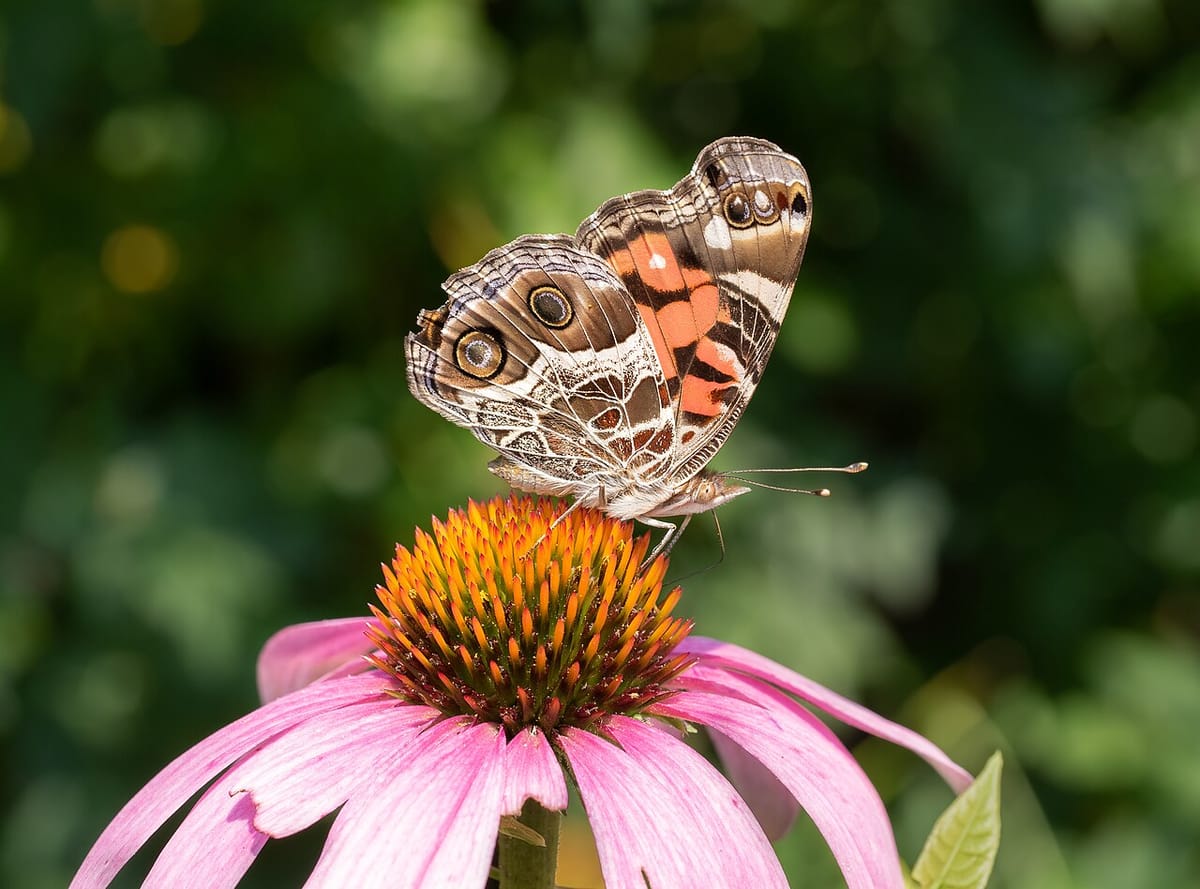
The prairie native that anchors half the low-maintenance borders in America, and deservedly: purple-pink daisies (plus modern whites, oranges, and reds) from midsummer to fall, on drought-proof three-foot stems that never need staking. Butterflies work the flowers all summer; goldfinches raid the seed heads all winter — which is why the fall cleanup rule here is don’t. Leave stems standing until spring; the border feeds the neighborhood while you’re indoors. Native-form varieties (‘Magnus’, ‘White Swan’) are tougher and more pollinator-useful than the frilliest new hybrids.
2. Black-eyed Susan (Rudbeckia) — zones 3–9, full sun
Coneflower’s golden colleague and the hardest-working yellow in horticulture. ‘Goldsturm’ is the famous variety: knee-high, smothered in gold from July to September, indifferent to heat, clay, and neglect. Spreads politely into a real drift within three years — free plants, pried off the clump’s edge with a spade. Same winter policy as coneflower: stems stand, birds dine.
3. Daylily (Hemerocallis) — zones 3–9, sun to light shade
Each bloom lasts a single day; each established clump produces so many buds that the show runs weeks anyway. Daylilies tolerate nearly everything — drought, flood, road salt, total neglect — which is why highway departments plant them. ‘Stella d’Oro’ reblooms all season at a foot tall; the classic tawny orange survives abandoned farmsteads for a century. Divide every four or five years when bloom thins, and know both truths about wildlife: the flower buds are edible in stir-fries, and deer agree enthusiastically — where deer pressure is high, plant something else.
4. Catmint (Nepeta) — zones 3–8, full sun
The billowing lavender-blue cloud edging every professionally designed border you’ve admired — chosen by the pros because it’s bulletproof. Catmint (‘Walker’s Low’, ‘Cat’s Meow’) blooms from late spring, and here’s its trick: shear the whole plant by half when the first flush fades and it reblooms within weeks, repeating to frost. Aromatic foliage means deer and rabbits skip it; bees do not. It’s the drought-tolerant, silver-leaved answer for hot dry edges, sharing the Mediterranean-team water ethic of low expectations, generously exceeded.
5. Sedum ‘Autumn Joy’ (Hylotelephium) — zones 3–9, full sun
A succulent that winters in Minnesota. Jade-green broccoli-like heads all summer, blushing pink in September, deepening to russet as everything else fades — the border’s reliable final act, mobbed by late bees and butterflies fueling for migration. Wants only sun and drainage (soggy winter soil is its lone enemy — it shares that fine print with every dry-country plant). Never watered, never fed, never staked if grown lean; stems stand handsomely through snow.
6. Hosta — zones 3–8, shade to part shade
The list’s shade delegate, proof that perennials aren’t only about flowers: hostas are grown for architecture — mounded foliage from blue-gray dinner-plate types (‘Sum and Substance’, ‘Blue Angel’) to white-edged minis, filling the dim corners where nothing sun-loving will go. Two honest caveats: slugs consider thin-leaved hostas a delicacy (choose thick blue-leaved varieties and keep the slug playbook handy), and deer consider all hostas a salad bar. In shade without deer, nothing is easier or lusher; clumps improve for twenty years and divide like firewood.
7. Salvia (perennial types) — zones 4–9, full sun
Vertical purple-blue spikes in early summer on aromatic, deer-proof, drought-proof foot-and-a-half plants — ‘May Night’ and ‘Caradonna’ are the standards. Salvia supplies the shape borders need (spikes among all those daisies and mounds) and the same shear-for-rebloom deal as catmint: cut spent spikes and it repeats through summer. Bees treat a salvia drift as critical infrastructure.
8. Peony — zones 3–8, full sun
The heirloom on the list — slower to establish (give it the full three-year rhyme) and blooming just two or three weeks — earning its place by sheer extravagance and absurd longevity: peonies outlive their planters, routinely passing 50 years, and division is optional rather than required. Fat late-spring blooms, fragrant, in a vase-worthy class of their own. Two rules decide success: plant shallow (the pink buds on the root — “eyes” — no more than two inches deep; buried deeper, a peony grows leaves forever and flowers never) and give the heavy-headed doubles a hoop support in April, not a rescue in May. The ants all over the buds are harvesting nectar, harming nothing — an old wives’ tale says they’re required; they’re merely traditional.
Alt: Comparison of a new perennial border in its first year versus its full third year
Caption: Sleep, creep, leap: the same planting, thirty months apart.
Planting and the (minimal) yearly rhythm
Plant in spring or — the underrated pro window — early fall, four to six weeks before freeze-up, when warm soil builds roots beneath a dormant top and next spring arrives pre-established. Dig the hole as deep as the pot and twice as wide, rough up circling roots, set the crown level with the soil (shallower for peonies), water in, and mulch two inches, keeping it off the crown itself.
The annual to-do list for an established easy-perennial border is almost embarrassing:
- Spring: cut down last year’s standing stems (into the compost), one compost top-dress, edge the bed. No routine fertilizer needed — these plants on decent soil find their own.
- Summer: shear the catmint and salvia after round one; deadhead what you feel like; enjoy.
- Fall: plant additions, divide what’s crowded, and leave the seed heads and stems standing — winter interest above, beneficial insects sheltering within, goldfinches dining on top.
- Every 3–5 years: divide the clumps that signal for it (donut-hole centers, shrinking bloom) — spade the clump up, split, replant one piece, and dispense the rest to friends, new beds, or the neighbor who admired the border. Division is how a hundred-dollar planting becomes a thousand-dollar garden on a schedule of one afternoon per few years.
Assembling the starter border
A 4-by-12-foot sunny strip, planted this fall or next spring: three coneflowers and three black-eyed Susans in alternating drifts at the back, three salvias center-stage, catmint repeated three times along the front edge, one sedum at each end, one peony at the sight-line spot where a focal point belongs — and annual zinnias seeded into every gap for year one, earning their keep while the perennials sleep. Cost: roughly a hundred dollars in small pots. Care: watering for one season, one shearing per summer, one cleanup per spring.
Return: bloom from May (peony) through hard frost (sedum), improving annually, essentially forever. By year three the gaps will have closed, the annuals will be optional, and you’ll have discovered the perennial gardener’s actual hobby — standing at the border’s edge in the evening, deciding which clump to divide next, and for whom.
Frequently asked questions
What is the difference between annual and perennial flowers?
Annuals (zinnias, marigolds) live one season, bloom relentlessly, and die at frost — maximum color, repurchased yearly. Perennials die back in winter but return from the roots each spring for years or decades, usually blooming a few weeks per year. Mature gardens mix both: perennials as the returning backbone, annuals as season-long color filler.
When is the best time to plant perennials?
Spring and early fall are both excellent; the worst time is high summer. Fall planting (4–6 weeks before ground freezes) is underrated — warm soil grows roots while the plant is dormant on top, producing a bigger year-one showing. Whatever the season, water new perennials through their entire first year; 'drought-tolerant' begins in year two.
Why is my perennial small in its first year?
That's the standard contract, summarized by the old rhyme: first year they sleep, second year they creep, third year they leap. Year one goes to roots, not show. Judge a perennial in its third season — and this is also why perennials in tiny inexpensive pots catch up to expensive gallon plants within two years.
Do perennials need deadheading like annuals?
It's optional but rewarding: deadheading extends or repeats bloom on many perennials (catmint and salvia rebloom strongly if sheared after the first flush). The exception worth knowing: leave the final fall flush of coneflowers and black-eyed Susans standing — the seed heads feed goldfinches all winter and the stems shelter beneficial insects.
What does 'dividing perennials' mean and when do I do it?
Digging up a mature clump every 3–5 years, splitting it into pieces with a spade, and replanting the divisions. It rejuvenates the plant (signaled by a dead donut-hole center or shrinking bloom) and multiplies your stock free. Rule of thumb: divide spring bloomers in fall, and summer/fall bloomers in early spring.
Which perennials bloom the longest?
Most perennials give 3–6 weeks, but a few marathon types stretch far past that: catmint and many salvias bloom late spring to fall if sheared once after the first flush, coreopsis runs most of the summer deadheaded, and coneflowers and black-eyed Susans carry high summer into fall. Sequencing varieties matters more than any single plant.
Are perennials cheaper than annuals in the long run?
Substantially — one $12 perennial that lives ten years and gets divided twice becomes several plants for roughly a dollar a year, versus rebuying annual six-packs each May. The budget version is even better: buy the smallest pots in fall sales, or acquire divisions from any gardener friend, since established perennial owners are always looking for adoptive homes.