Pothos Care: The Complete Guide to the Best First Houseplant
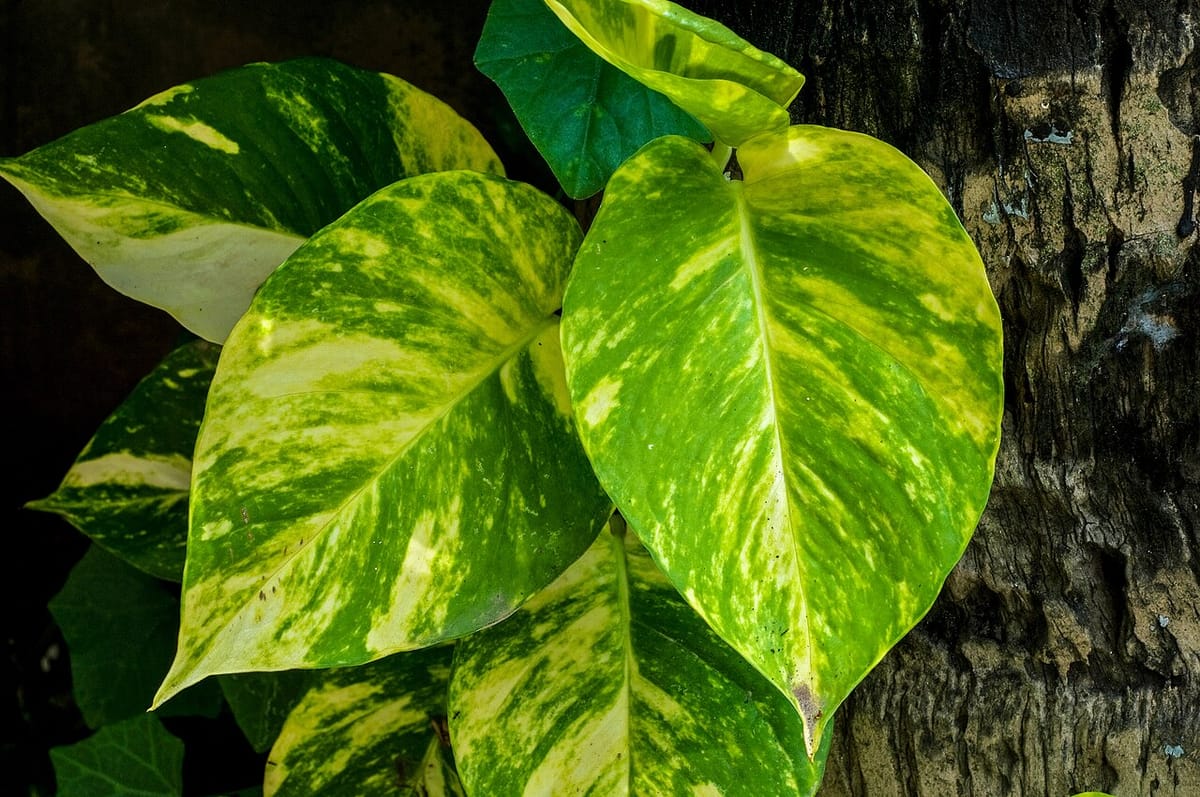
Ask plant people to nominate the perfect first houseplant and the vote splits between two candidates: the snake plant, which thrives on abandonment, and the pothos, which does something arguably more valuable — it communicates. A pothos droops visibly when thirsty and perks up within hours of watering; it stretches toward light it lacks; it yellows when overwatered. Every signal is legible, every mistake is survivable, and every success is visible as new heart-shaped leaves unfurling weekly. It’s not just an easy plant; it’s a plant that teaches plant-keeping.
It’s also, pound for pound, the most generous decorator in the houseplant world: a $12 pothos becomes six feet of trailing vine within a couple of years, then becomes ten more plants via cuttings that root in a water glass. This guide covers the modest care it wants, the two or three signals worth learning, the pruning move that turns stringy into lush, and the propagation assembly line.
Meet the plant (and its aliases)
Pothos (Epipremnum aureum) is a tropical vine from Southeast Asian forests, where it scrambles up tree trunks into a monster with two-foot leaves. Indoors it stays politely juvenile — heart-shaped leaves on trailing or climbing vines — and tolerates the dim, dry, centrally heated conditions that kill fussier jungle plants. You’ll meet it under several names (devil’s ivy most commonly, for its refusal to die) and in a wardrobe of varieties: Golden (green marbled with yellow — the classic), Marble Queen (white-splashed, slower), Neon (electric chartreuse), Jade (solid green, the low-light champion), plus newer patents like ‘Pearls and Jade’ and ‘Global Green’. Care is identical across the closet; only light appetite differs — the more white or gold in the leaf, the more light it needs to keep it (variegated cells don’t photosynthesize, so a Marble Queen in a dark corner quietly reverts to green out of economic necessity).
One honest disclosure up front: pothos leaves contain calcium oxalate crystals, so chewing pets get a painful mouth and drooling — rarely dangerous, but hang or shelve vines away from committed nibblers (the ASPCA plant list is the reference; fully pet-safe alternatives live in our low-light lineup).
Light: survives anywhere, shines somewhere
The pothos light contract has generous terms and one fine-print clause:
- Ideal: bright, indirect light — an east windowsill, a few feet back from a south or west window, or any spot bright enough to read in all day. Expect fast growth and loud variegation.
- Acceptable: ordinary room light, north windows, offices lit mostly by fluorescents. Growth slows, leaves space themselves wider on the vine, variegation mutes — the plant is fine, just thrifty.
- The clause: no hot direct sun — midsummer rays through south glass bleach and scorch the leaves. Sheer curtains fix what relocation can’t.
- The tell: long stem gaps between small leaves mean the plant is stretching on a light budget; richer variegation and tighter leaves mean it’s well funded. The plant files this report continuously — read the newest growth.
Water: the drama queen method works
Pothos is the ideal plant to practice the check-first watering system because it grades your work:
- Check weekly — finger two inches into the soil. Dry: water thoroughly until it runs from the drainage holes, empty the saucer. Moist: walk away.
- When in doubt, wait for the wilt. A thirsty pothos droops and curls slightly — then recovers completely within hours of watering, no harm done. This drama-then-recovery cycle is the safest possible teacher, because the opposite error is the one that kills: pothos sitting in chronically wet soil yellows, then rots at the roots.
- Translate the leaves: several yellowing leaves + heavy wet soil = overwatering (let it dry fully; water less often). Crispy brown tips = dry air, long droughts, or accumulated fertilizer salts (flush the pot through occasionally). Soft dark patches = rot warning — check roots now.
Room-temperature water, no misting required (it does nothing pothos needs), and roughly half the watering frequency in winter, when short days idle the plant.
Food, soil, and the occasional new pot
- Soil: any decent bagged potting mix; pothos is unfussy if drainage exists. A handful of perlite never hurts.
- Feeding: half-strength balanced liquid fertilizer monthly, spring through early fall; nothing in winter. Unfed pothos survives fine — it just grows slower and smaller-leafed. Overfed pothos gets brown tips; the plant is a modest eater.
- Repotting: every couple of years or when roots circle the pot and water races straight through — one size up only (a 6-inch plant into an 8-inch pot). Overpotting into a soil swamp is the one repotting mistake that costs pothos lives. Spring is the kind moment.
The fullness formula: prune, root, replant
Left alone, a pothos pours everything into a few ever-longer vines — impressive in length, thin at the crown, and eventually a green string with a leaf every eight inches. The fix is a virtuous circle that beginners should run yearly:
- Cut back the stragglers. Snip long, sparse vines wherever you want branching — just above a leaf, with clean scissors. The vine forks at (or behind) each cut; the plant thickens. Be as bold as the plant’s condition allows; pothos regards hard pruning as encouragement.
- Chop the trimmings into cuttings. Every piece with a leaf and a node — the brown knuckle on the stem where roots live — is a future plant. One six-inch trimming yields three or four.
- Root them in water. Nodes submerged, leaves dry, bright indirect sill, water refreshed weekly. Roots in one to three weeks; it’s the best free biology show a windowsill offers.
- Plant the rooted cuttings back into the mother pot. Once roots hit an inch or two, tuck them into the bare spots at the crown. The plant refills itself with itself — this loop, run annually, is the entire difference between the wispy pothos and the waterfall ones on social media.
Spare cuttings become gifts, desk plants, and colonies for dim corners — a single healthy pothos is a nursery in disguise.
Alt: Four-step pothos propagation sequence from pruning to replanting rooted cuttings
Caption: The fullness loop: cut, root, replant, repeat annually.
Trailing, climbing, or both
Style is the pothos owner’s one design decision. Trailing — shelf, hanging basket, bookcase — is the default and effortless; just rotate the pot occasionally so growth stays balanced. Climbing is the plant’s secret preference: given a moss pole, trellis, or even cup hooks along a wall, vines head upward — and here’s the party trick — leaves grow progressively larger as the plant climbs, an echo of its tree-scaling jungle habit. A climbing pothos over a few years earns leaves double or triple hanging-basket size. Attach vines loosely with plant tape or clips; aerial roots grip a damp moss pole on their own.
Troubleshooting, condensed
| Symptom | Likely cause | Fix |
|---|---|---|
| Several yellow leaves, wet soil | Overwatering | Dry out fully; adopt the finger test |
| Wilting, dry soil, fast recovery after water | Underwatered (mildly) | Fine — that’s the alarm working; water sooner next round |
| Long bare stems, small leaves | Too little light | Brighter spot; prune and replant to refill |
| Variegation fading to green | Light economics | More indirect light; trim reverted solid-green vines to keep patterned ones dominant |
| Brown crispy tips | Dry air, drought stretches, salt buildup | Even watering; flush pot through quarterly |
| Soft dark patches, mushy stems at soil | Root rot underway | Unpot, trim brown roots, fresh dry mix, water restraint — same surgery as snake plant rescue |
| Sticky residue, tiny bugs | Mealybugs/aphids indoors | Wipe with soapy water or diluted rubbing alcohol on a swab, repeat weekly till clear |
Nothing on that list is exotic, and the first two rows cover the overwhelming majority of real-world cases.
The case for starting here
Every houseplant collection needs its first success, and pothos is engineered for the role: legible signals, survivable mistakes, visible weekly progress, and a propagation loop that converts pruning — the scariest beginner task — into free plants. Master its simple rhythm (light it can read by, water when dry, cut it back when it gets stringy) and you’ve mastered the template for most tropical houseplants. The snake plant may be harder to kill; the pothos is better at making you a plant person. Get both, honestly — one for each kind of corner — and let the water glass on the windowsill do its quiet multiplication.
Frequently asked questions
Why are my pothos leaves turning yellow?
A few scattered old leaves yellowing and dropping is normal turnover. Multiple yellow leaves at once — especially with soil that's staying wet — is overwatering, the classic pothos complaint. Check the soil: if it's damp and heavy, let it dry out fully and water less often. Pale-yellowish new growth overall suggests too much direct sun or hunger instead.
How often should I water a pothos?
When the top two inches of soil are dry — typically every 1–2 weeks depending on light and season, but the finger test outranks any schedule. Pothos wilts slightly and its leaves curl when thirsty, then bounces back within hours of watering; it's far more forgiving of 'too dry' than 'too wet.'
How much light does a pothos need?
It survives almost anywhere but thrives in bright, indirect light — near an east window or a few feet from a south one. Deep shade slows it and fades variegation to plain green; hot direct sun scorches leaves. If you want the marbled gold or white patterns to pop, more (indirect) light is the lever.
How do I make my pothos fuller instead of one long vine?
Cut it back and recycle the cuttings. Trimming long vines just above a leaf triggers branching from the cut point, and the trimmed pieces root easily in water — plant them back into the same pot once rooted and the plant literally fills itself in. A pothos that's never pruned becomes one heroic, balding vine.
Is pothos toxic to cats and dogs?
Yes — the leaves contain insoluble calcium oxalate crystals that cause mouth pain, drooling, and vomiting if chewed. It's rarely life-threatening, but keep vines hung or shelved out of reach of committed chewers, and call your vet if a pet has eaten a quantity.
How long do pothos cuttings take to root in water?
Roots typically appear in 1–3 weeks (faster in warmth and good light) from the brown bumps — nodes — on the stem. Cuttings need at least one node underwater; leaves alone won't root. Pot them once roots reach an inch or two; very long water-grown roots adapt to soil more grudgingly.
Why does my pothos have brown tips or brown patches?
Crisp brown tips usually mean very dry air, underwatering stretches, or fertilizer salt buildup (flush the pot through at the next watering). Soft brown-black patches, often with yellow halos, point to overwatering and root rot — check the roots and repot in fresh dry mix if they're brown and mushy.